
Basic Principles & Classification of Industrial Vacuum Equipment
Vacuum equipment refers to a full set of devices removing gas molecules from sealed chambers to form pressure below standard atmospheric pressure (101325Pa), serving as foundational hardware across modern precision manufacturing and high-tech industries. Unlike common misunderstanding, vacuum does not mean zero molecular existence but an environment with drastically reduced gas density and prolonged molecular free path, the core physical basis for all vacuum processing technologies. Industrial vacuum grades are divided into rough vacuum (10⁵~10²Pa), medium vacuum (10²~10⁻¹Pa), high vacuum (10⁻¹~10⁻⁵Pa) and ultra-high vacuum (below 10⁻⁵Pa), matched with differentiated pumping equipment for graded evacuation.
Core vacuum-generating hardware falls into three mainstream categories: mechanical roughing pumps, high-vacuum molecular pumps and capture-type cryogenic pumps. Rotary vane pumps and dry screw pumps dominate rough vacuum generation; rotary vane pumps adopt eccentric rotor and telescopic vanes to compress gas mechanically, widely used as forepumps for pre-evacuation, while oil-free dry screw pumps use twin interlocking screw rotors with zero internal contact, eliminating oil contamination risk for clean production lines. Turbomolecular pumps run at 20,000–90,000 RPM multi-stage turbine blades, transferring kinetic energy to gas molecules for high-vacuum pumping down to 10Torr, the standard core for semiconductor and coating equipment. Cryopumps condense all gas molecules on ultra-low-temperature cryogenic surfaces below 120K, delivering contamination-free ultra-high vacuum ideal for optical coating and space component testing.
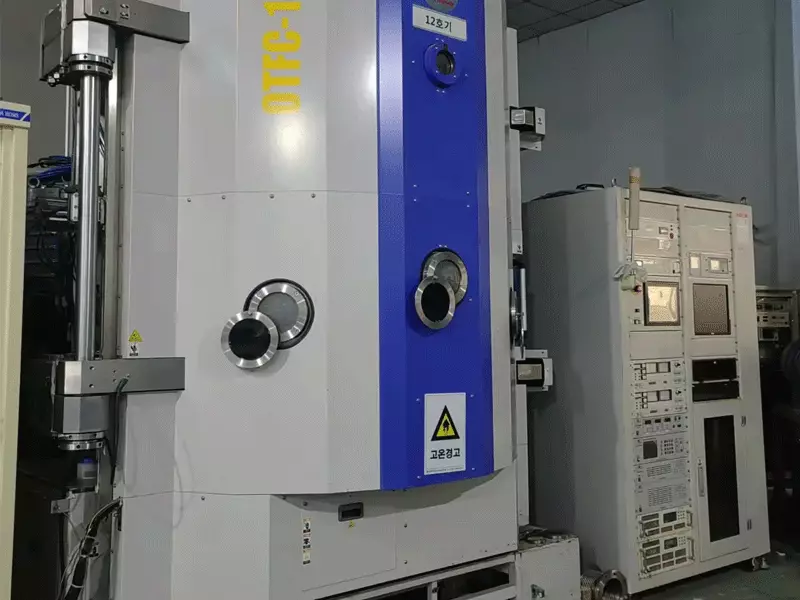
Complete vacuum systems also contain auxiliary components: vacuum valves for pipeline on-off, vacuum gauges for real-time pressure monitoring, gas filters and leak detectors to avoid system outgassing and air infiltration. In recent decades, intelligent vacuum control modules gradually replace manual regulation, enabling automatic pump start-stop and pressure stabilization, greatly cutting equipment operation costs and failure rates. From laboratory small vacuum chambers to ton-level industrial coating furnaces, graded vacuum configuration remains the core design logic of all vacuum equipment nowadays.
Next: No More
