
Key Points of Vacuum Equipment Daily Maintenance & Fault Prevention
Standardized daily maintenance directly extends vacuum equipment service life by 30%~50% and reduces unexpected downtime failure rate, covering rough pumps, turbo pumps and full-set coating vacuum system three core maintenance modules, an important after-sale technical guide for overseas end-users purchasing Chinese vacuum machinery.
For oil-lubricated rotary vane rough pumps, core maintenance focuses on regular vacuum oil replacement and inlet filter cleaning: oil degrades by absorbing water vapor and process gas after 200–500 working hours, deteriorated oil leads to pump ultimate vacuum drop and internal rotor corrosion; inlet filter blocks dust and solid particle entering pump cavity, clogged filter causes insufficient pumping speed, requiring weekly visual inspection and monthly cleaning for heavy-dust production environment like hardware coating factory. Dry oil-free screw pumps need regular heat dissipation channel cleaning and bearing lubrication inspection; long-hour overheating leads to screw rotor thermal expansion jamming, avoiding continuous overload operation over rated pumping flow is the key fault prevention measure.
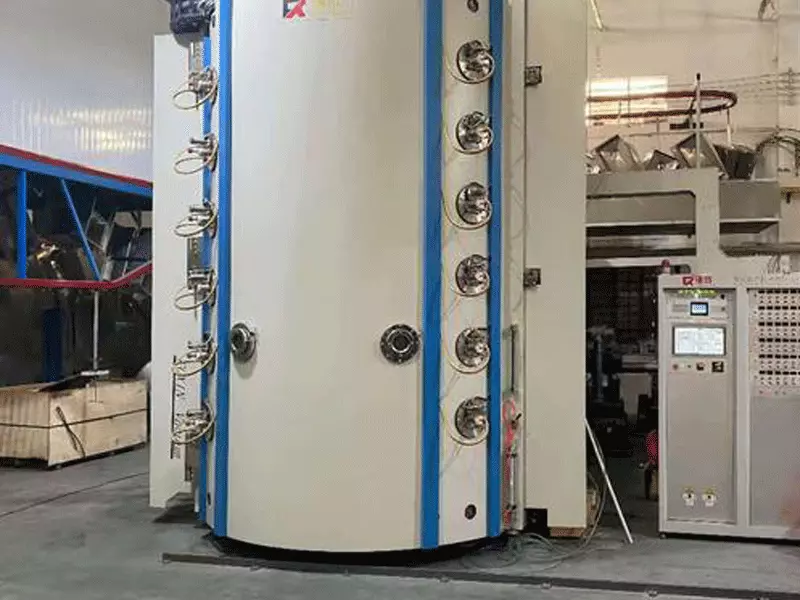
Turbomolecular pump maintenance centers on bearing condition monitoring: ball-bearing turbo pumps need periodic grease replenishment per 8000 working hours, magnetic levitation turbo pumps require no mechanical lubrication but regular cooling fan and power supply inspection to prevent overvoltage damage; sudden power cut is forbidden during high-speed rotor operation to avoid turbine blade collision deformation. For complete vacuum coating system, weekly leak detection on flange sealing rings and pipeline valves is mandatory; aging rubber sealing ring is the top reason for slow vacuum dropping, timely replacement of deformed sealing parts avoids long-time chamber air leakage and failed coating batch.
Storage environment also impacts standby vacuum equipment: finished pumps should be placed in dry constant-temperature warehouse to prevent internal parts rust from damp air. Most overseas after-sale problems of exported Chinese vacuum equipment arise from irregular maintenance by end-users; manufacturers attach detailed multilingual maintenance manuals together with machine delivery to guide clients’ daily standardized management effectively.
